






5 tips to help you start investing
We know the investment world can be confusing. There are many options to choose from and some companies like to use a lot of jargon. For this reason, we’ve gathered 5 pointers to help you on your way.

1. Think about how you want to make decisions
You might want to choose your own investments. If you do, you’ll find lots of information and guidance out there to help (including this series of articles, which we hope you’ve found useful). Plus, investing is not as complicated as it used to be. There are funds that can do some of the work for you, so you don't have to do everything yourself. If you want to invest, but you’re not yet ready to make the decisions, you can get expert help. Financial experts can take the time to understand your situation and then help you take the first steps into the investment world. They may also be able to create an appropriate long-term investment plan to meet your specific needs.

2. Decide your own investment goals
Some investment goals are specific – such as retirement, weddings, university – others are more general. If you just want to have money growing for your future, so you can use it when you need it, that’s still a goal. Deciding on your goals can help you work out what’s important to you and what you want to achieve. You can then make plans to achieve them – either on your own or with a financial expert.

3. Understand your risk level
Risk can sound off-putting, but when you’re talking about investment risk, it’s really just a way of looking at how funds perform. Investors take on risk because they are looking for returns. The traditional rule of thumb is ‘the higher the risk, the higher the potential return’ although this is not always the case. One of the most important aspects of risk is the extent to which the value of your investments is likely to move up and down.
If you know that you’re likely to react negatively to market declines, you may want to keep your portfolio in more conservative investments. It’s much better to be a bit more conservative and hold on to your investments through the ups and downs, than to buy riskier assets and sell during market crashes!

4. Spread your money
As we explain in our article Why it pays to invest widely, investing in a range of assets can reduce investment volatility. It means you hold a selection of investments that are likely to perform in different ways at any one time. This has the effect of smoothing out some of the ups and downs in the performance of your investments and helps you avoid unnecessary risk.
You can do this yourself by choosing several funds that invest in different countries, regions and asset classes – or you could work with a financial expert to help you create a diversified selection. Another option is to choose an investment such as a multi-asset fund that does it for you.

5. Start small by investing regularly
Finally, don’t be put off by the idea that you need lots of money to start investing. You can invest huge sums if you want to, but a great way to get started is with small and regular savings. They can add up a lot quicker than you might think, particularly if they perform well. You can often start investing for as little as $50 per month.
Another advantage of regular savings is that they can quickly become a good habit. It could put you in a much stronger financial position in the years ahead.
Don’t sit on your cash
Download our guide for information on stepping off the sidelines and into the investment world
Download the guide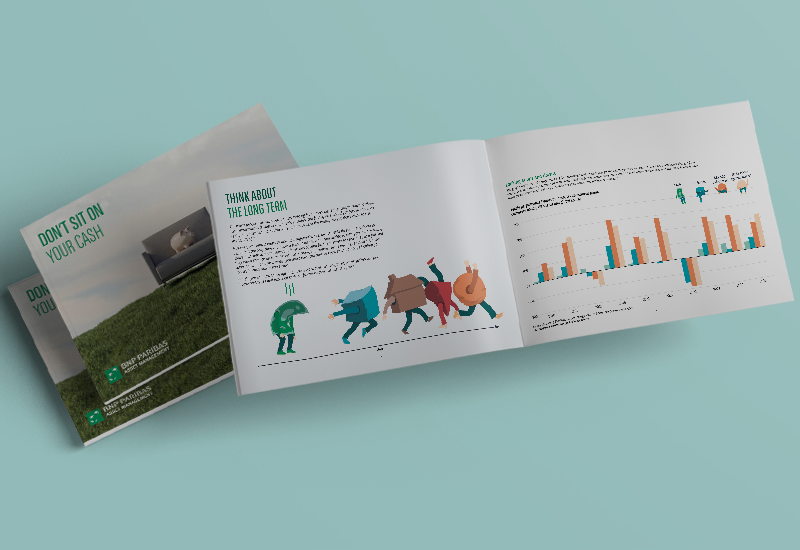
More articles from our Don't sit on your cash mini-series