





The power of long-term investing
If you’ve been put off the idea of investing by the thought of losing money, we understand. The fear of loss can be strong, particularly when it’s money you worked hard to earn. But we think there’s a better way to look at it that could help you make more of your money and achieve your financial goals.
Understanding gains and losses
The first thing to keep in mind is that there’s a difference between changes in the value of your investment and gaining or losing money. Investments will rise or fall in value from day to day – and sometimes these add up to larger changes over weeks and months. There are likely to be times when they fall for a longer period of time. Hopefully, there will also be times when they rise significantly.
Looking at ups and downs
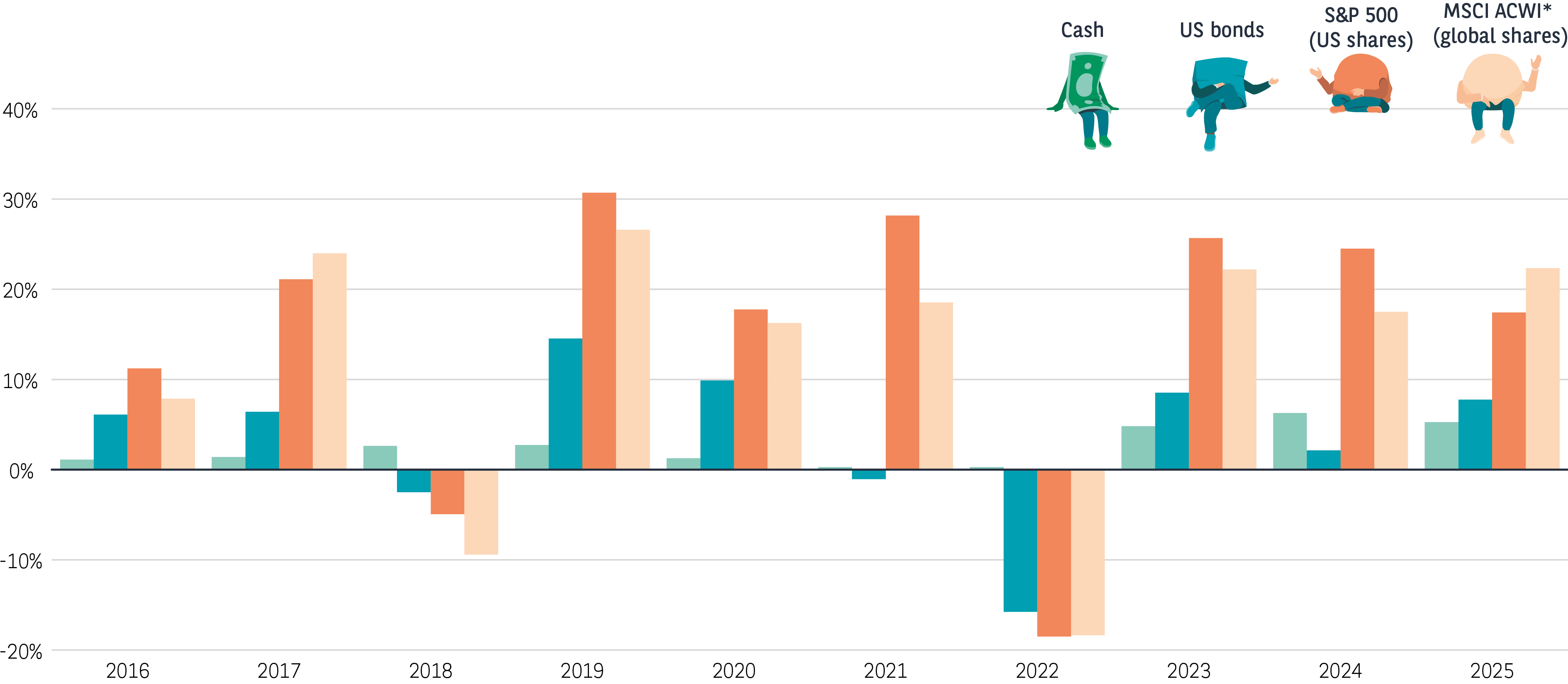
To help you understand these ups and downs, we’ve picked out four investment options and looked at how they’ve performed each year for the last 10 years. As you can see, global and US shares have more changes from year to year than US bonds, while the bonds still have more changes than US cash.
Some people might look at the figures for shares and find it hard to see past the years with minus numbers. But you need to remember the positive years as well. Because their effect can be significant.
Yearly performance figures for cash, US investment grade corporate bonds, US shares and global shares
Source: Bloomberg, BNP Paribas Asset Management. US dollars. *All Country World Index.
Past performance does not predict future returns.
The impact of a long-term perspective
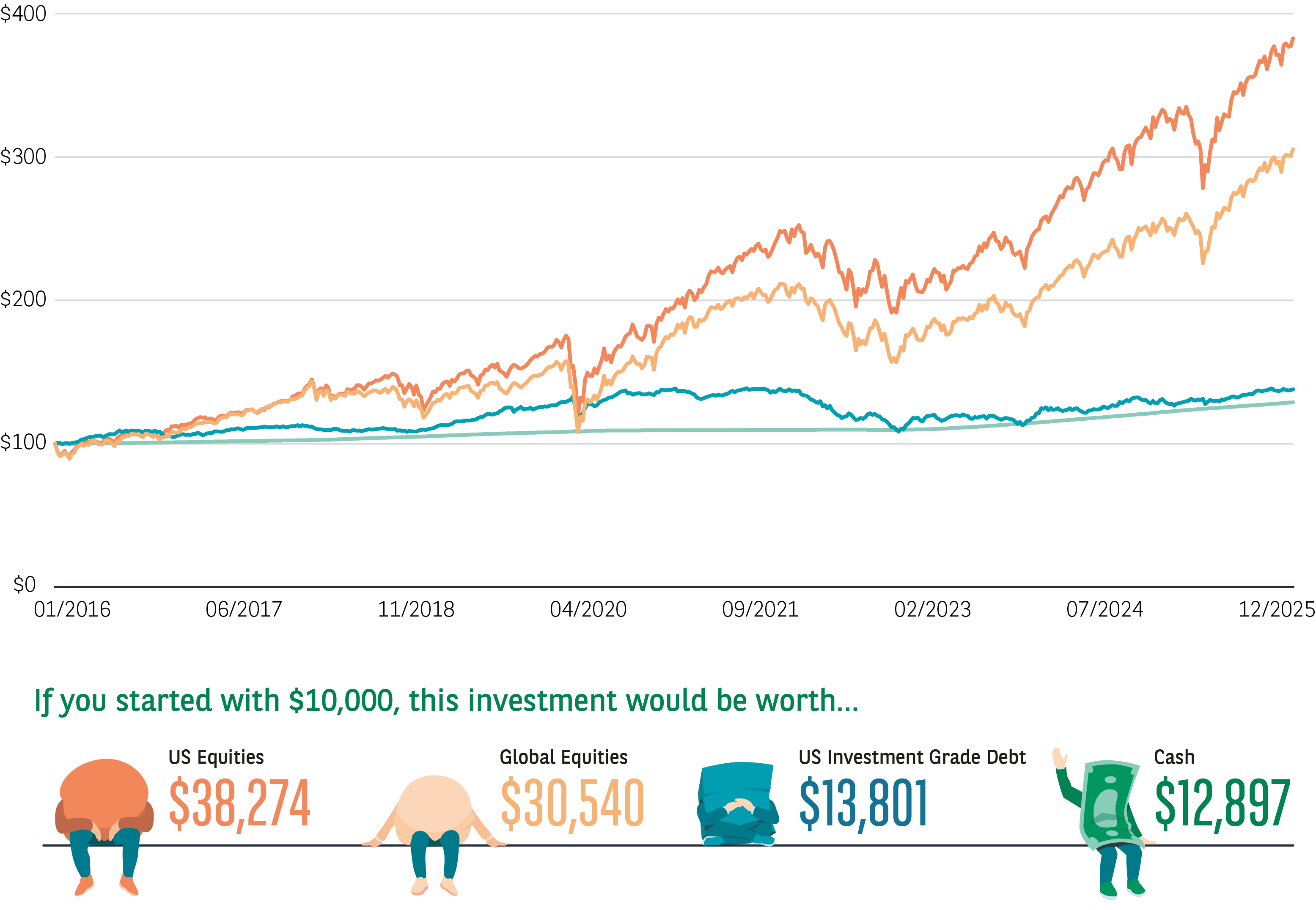
To demonstrate just how significant this can be, we’ll show you the years again, but this time we’ll combine them into one graph, rather than having them separate. After all, when you’re investing for the long term, you will see good years and bad years. But, as long as you stay invested throughout, what matters is the cumulative performance.
Shares might have had some negative years, but their total performance was much higher than bonds or cash. Over the ten-year period, US shares rose in value by 283% and global shares by 205%, while bonds were 38% and cash was 29%.
Performance of cash, US investment grade corporate bonds, US shares and global shares
Source: Bloomberg, BNP Paribas Asset Management. Data from 1 January 2016 to 31 December 2025, US dollars. Rebased to 100 as at graph start date.
Past performance does not predict future returns.
It's a big difference. And that’s the potential long-term growth that investing can offer you.
Remaining invested – for better or worse days
Of course, a major proviso here is remaining invested through the ups and downs, as the only way you can lose money is when you take your money out. Some people choose to do this, or move their money between cash and investments, to avoid market volatility. However, doing this exactly right – ‘timing the market’ – can be very difficult to do consistently.
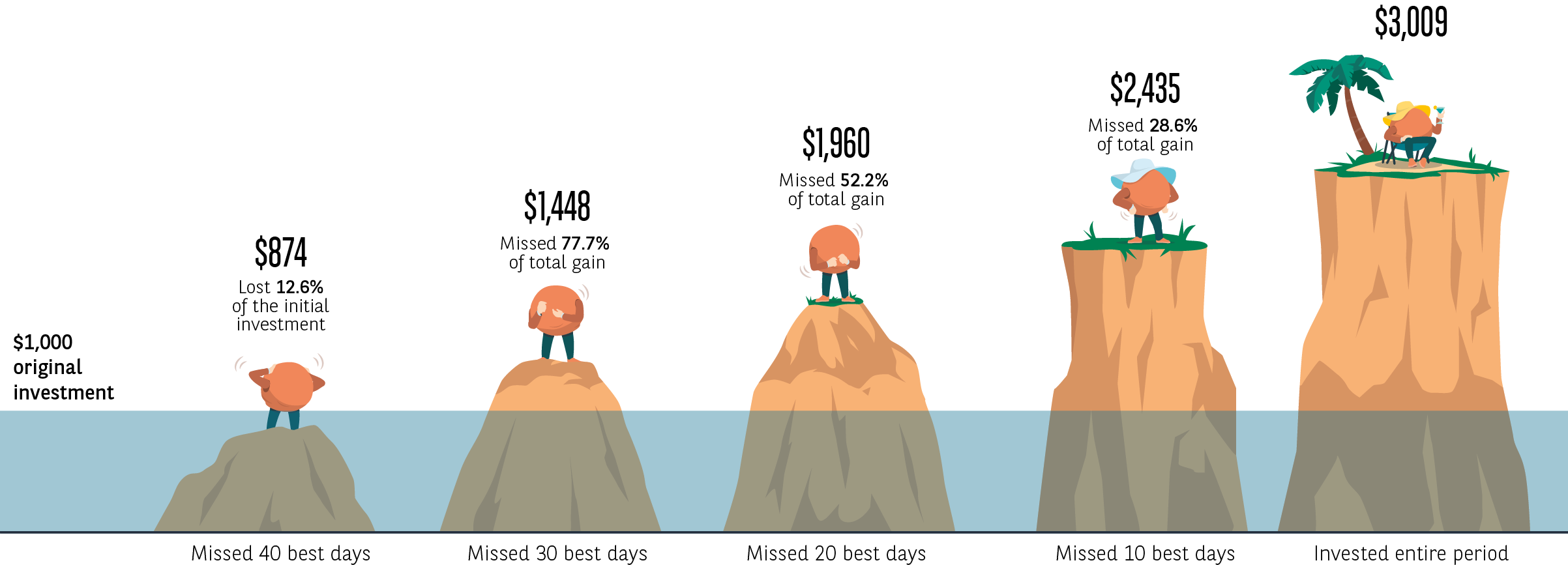
The best days in the market (those where investments rise the most) often occur very closely to the worst days. If you miss even just a few of them, the impact on your portfolio can be significant.
The graphic shows the value of $1,000 invested in global shares over 10 years. If you missed just 10 of the best days during this time (equivalent to one day a year), you’ll miss out on 29% of your potential returns. Miss the 40 best days (four a year) and instead of more than doubling your money, you would finish with less than you started with.
Source: Bloomberg, BNP Paribas Asset Management. Data from 30 December 2015 to 31 December 2025, US dollars. Past performance does not predict future returns.
We think these are powerful reasons to step off the sidelines and make your money work for you, with a view on the long term. If you’d like to learn more about how to do this, please read the other articles in this series or download our guide.
Don't sit on your cash
Download our guide for information on stepping off the sidelines and into the investment world
Download the guide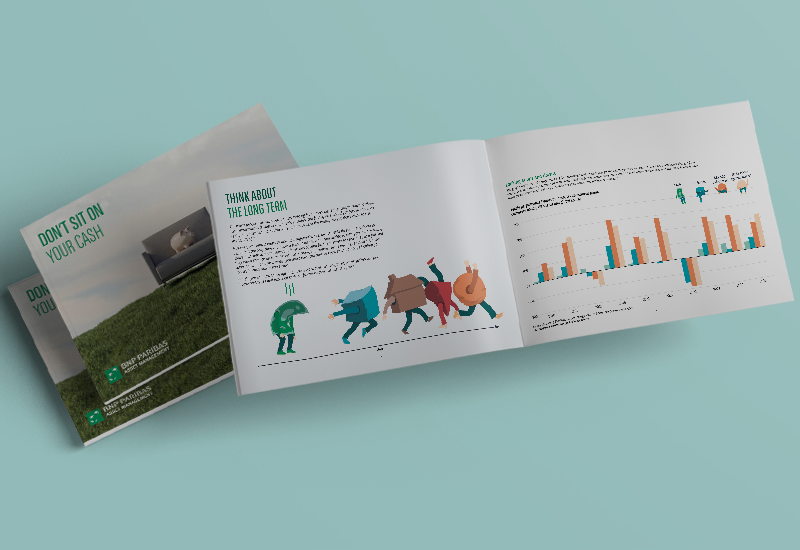
More articles from our Don't sit on your cash mini-series